

BREXIT
UK House of Lords to debate law that would give the PM powers to begin Brexit
The United Kingdom's upper house of Parliament on Monday were to debate the law that would allow the prime minister to begin the country's official withdrawal from the European Union.
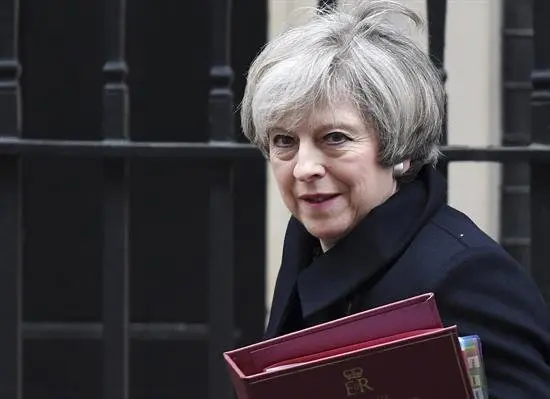

London, Feb 20 .- The United Kingdom's upper house of Parliament on Monday were to debate the law that would allow the prime minister to begin the country's official withdrawal from the European Union.
Reconvening after a week-long parliamentary recess, members of the House of Lords would debate the law to give Theresa May the power to activate Article 50 of the Lisbon Treaty, the mechanism that formally invokes the exit procedure.
That law passed through the UK's lower house, the House of Commons, without amendment earlier in the month after it received the backing of 498 members of Parliament against 114.
Center-left Labour Party peers in the House of Lords, who unlike MPs in the Commons are appointed rather than elected, have proposed eight amendments to the bill, including a clause on guaranteeing the living rights of EU citizens in a post-Brexit UK.
May has said that priority would be given to finding a solution for EU citizens living in the UK as well as UK citizens in the EU, although no fixed arrangement could be made until the official two-year period of negotiations had begun between London and Brussels.
The UK PM has repeatedly said she would trigger Article 50_ initiating that negotiation period_ by the end of Mar., which would mean the UK would be out of the EU by the spring of 2019.
The debate is due to kick off at 15:30 GMT and around 190 peers are expected to intervene with speeches.
May's Conservative Party government had initially sought to push Brexit through without having to consult Parliament but that initiative was hampered by a Supreme Court ruling.
Some 52 percent of British voters chose to leave the EU in a landmark referendum in June 2016.
Brexit received strong support from voters in England and Wales but was rejected by those in Northern Ireland and Scotland. (EFE)